
There’s a category of franchise that doesn’t get enough air time in development conversations. It doesn’t carry the visibility of food or fitness. It doesn’t have the infrastructure familiarity of home services. But when you look at the structural characteristics – recurring revenue, emotional loyalty, low footprint, real mission – it checks every box that investors and consultants should be paying attention to.
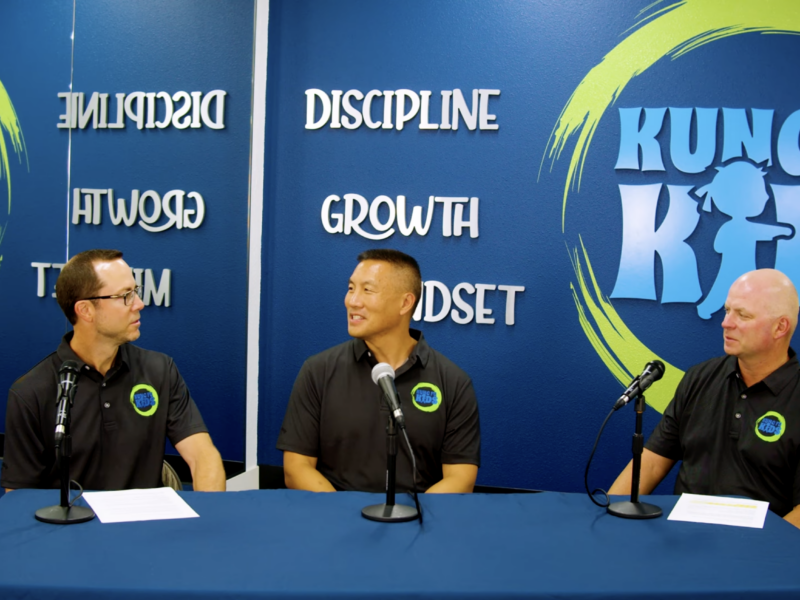
That category is children’s enrichment. And the conversation that made the case most clearly came from David Chang, CEO and Founder of Kung Fu Kids, in a recent episode of BrandONE-on-ONE with BrandONE Partners Michael Mudd and JT Thiessen.
David didn’t build a martial arts academy. He built a structured enrichment program over 25 years, starting in a garage in 2001, that uses that uses age-segmented curriculum and the martial arts belt progression to teach children what schools are increasingly unable to teach: how to set a hard goal, work toward it for months, earn the result, and handle the setbacks along the way. The franchise is Kung Fu Kids. The mission is to turn children into successful adults. The business model is one of the cleanest we’ve seen.
The Problem the Franchise Was Built to Solve Is Getting Worse
David has a specific name for the cohort he’s teaching right now: the iPad generation. And he’s direct about what that means. Children who grow up with instant access to every stimulation they want , and the ability to swipe away from anything that becomes difficult, are developing a different relationship to effort than any prior generation.
That’s not nostalgia. It’s an observable behavioral pattern with real consequences. The ability to defer gratification, to pursue something difficult without an immediate reward, to sit with discomfort and keep going: these are skills that don’t develop automatically. They have to be built. And more schools, more parents, and more pediatricians are saying that the window where those skills form is getting harder to use.
Kung Fu Kids exists at that window. The belt system – white belt to black belt – isn’t a measure of fighting ability. It’s a structured goal-setting mechanism. A child who earns a black belt has spent years pursuing something hard, failing repeatedly, and continuing anyway. That experience transfers. And for children on the autism spectrum or with other special needs, the Spectrum Stars program offers the same structure with the flexibility and patience those children need, creating some of the most powerful outcomes and the most loyal families in the entire system.
What the Business Model Actually Looks Like
Children’s enrichment brands frequently get evaluated on mission without enough scrutiny of the model. Kung Fu Kids survives that scrutiny.
Ninety-six percent of revenue is subscription-based. Members pay a flat monthly fee regardless of how many classes they attend, which eliminates the drop-in volatility that makes most service franchises difficult to staff and forecast. Franchisees know what next month looks like. That changes how they manage P&L, how they make hiring decisions, and how they think about growth.
The physical footprint is simple: 2,000 to 3,000 square feet of open floor space. No kitchen. No complex infrastructure. A lease signed in one month typically means a studio open the next. That speed to revenue, combined with the subscription model, means franchisees reach break-even faster than most comparable enrichment concepts.
Marketing and lead management are handled systematically. Sidekick Media manages digital acquisition. A dedicated call center contacts every new lead within five minutes of inquiry: a response window most local businesses can’t come close to matching, and one that meaningfully improves conversion from interest to enrollment. The first Kung Fu Kids franchisee is currently enrolling approximately one new student per day. That’s not a projection. That’s performance.
The Operational Infrastructure That 25 Years Builds
Most franchise concepts come to market with a promising concept and a partially built operating system. Kung Fu Kids is different. David Chang spent a quarter century building, testing, and refining the Kung Fu Kids model in company-owned locations before he offered it to franchisees. That timeline produces a different kind of document library, a different depth of instructor training, and a different level of operational confidence.
The centerpiece of that infrastructure is Woover: Kung Fu Kids’ proprietary LMS platform. Woover provides instructors with a class-by-class, minute-by-minute guide to exactly what they’re teaching, how they’re teaching it, and what the developmental outcome of each activity is. A franchisee with zero martial arts background can open a Kung Fu Kids studio. Their instructors, hired from the local community, not from a martial arts pipeline, can be trained and operating effectively within the system.
What Woover enables isn’t just operational consistency. It enables a staffing model that isn’t dependent on finding a rare specialist. That’s critical for scalability. And for the employee side of the equation, David built a career road map that mirrors the belt system itself: clear advancement levels, skills associated with each level, and visible progression that makes teaching at Kung Fu Kids a career, not a gig.
What the Right Candidate Looks Like
David is not looking for someone who can do a roundhouse kick. He’s looking for someone who believes in what the program does for children; they also need to be willing to trust the system he spent 25 years building.
The profile is consistent with the best-performing franchisees across BrandONE’s portfolio: community-oriented, relationship-driven, excited to own something that has real meaning in their town. The candidate who asks first about the karate is often asking the wrong question. The candidate who asks first about the parents in the waiting room – what they’re hoping for, what they come back the next week to report – is in the right place.
Semi-absentee ownership is possible and supported. The Woover system, the call center, the digital marketing infrastructure, and the career road map for staff all reduce the owner’s operational burden significantly. But David’s standard for franchise ownership is engagement, not absence. Attend training. Stay close to your franchise support team. Make the right management hire. Show up when it counts.
Why This Category Is Gaining Ground Right Now
The timing for children’s enrichment franchises is not accidental. In a market where parents are increasingly worried about screen time, social isolation, anxiety rates in children, and the absence of real-world skill-building from school curricula: a franchise that addresses those anxieties directly, with a structured program and visible results, has a built-in acquisition story that most categories can’t match.
The conversation David Chang has with parents isn’t a marketing conversation. It’s a values alignment conversation. Parents aren’t choosing a martial arts class. They’re choosing the outcome they want for their child. And when a parent sees that outcome: when they tell David that their child just started asking for harder challenges instead of avoiding them, or that their teenager finally made a decision without needing a parent to make it for them — they don’t leave. They refer. They become the word-of-mouth engine that makes every Kung Fu Kids location a local institution.
That’s the franchise category most consultants aren’t leading with. It probably should be in the conversation more than it is.
 BrandONE Marks 10 Years as Emerging Franchise Brands Face a Higher Bar for Sustainable Growth